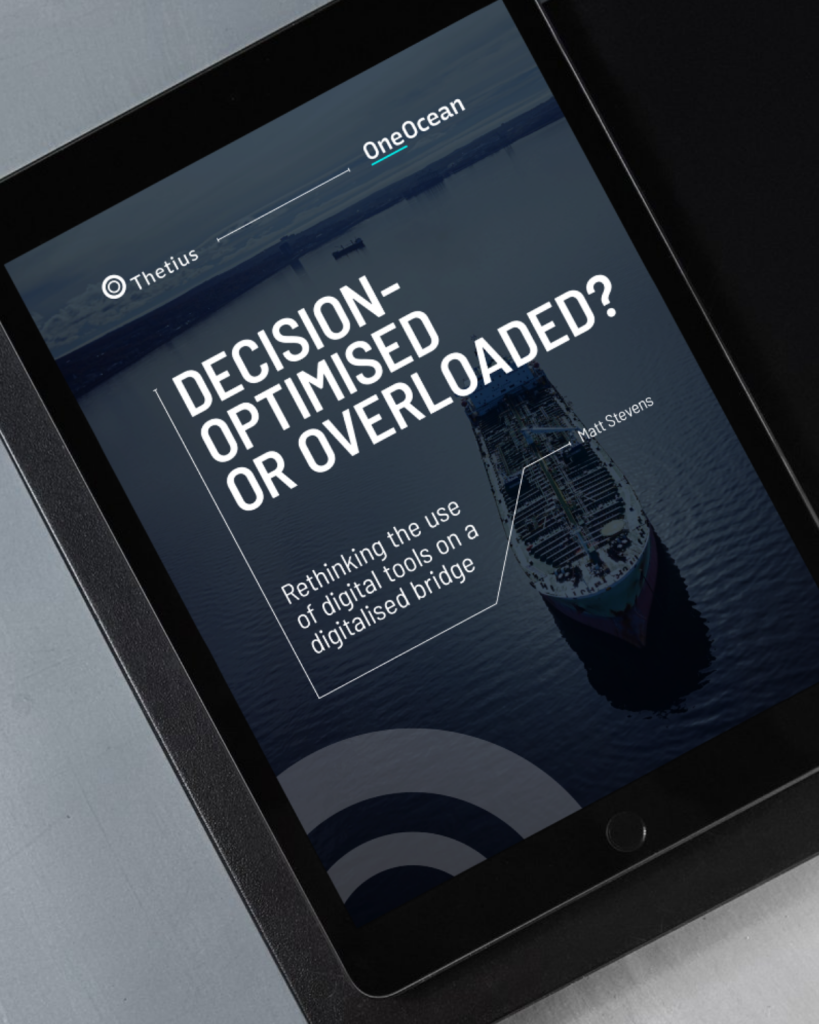
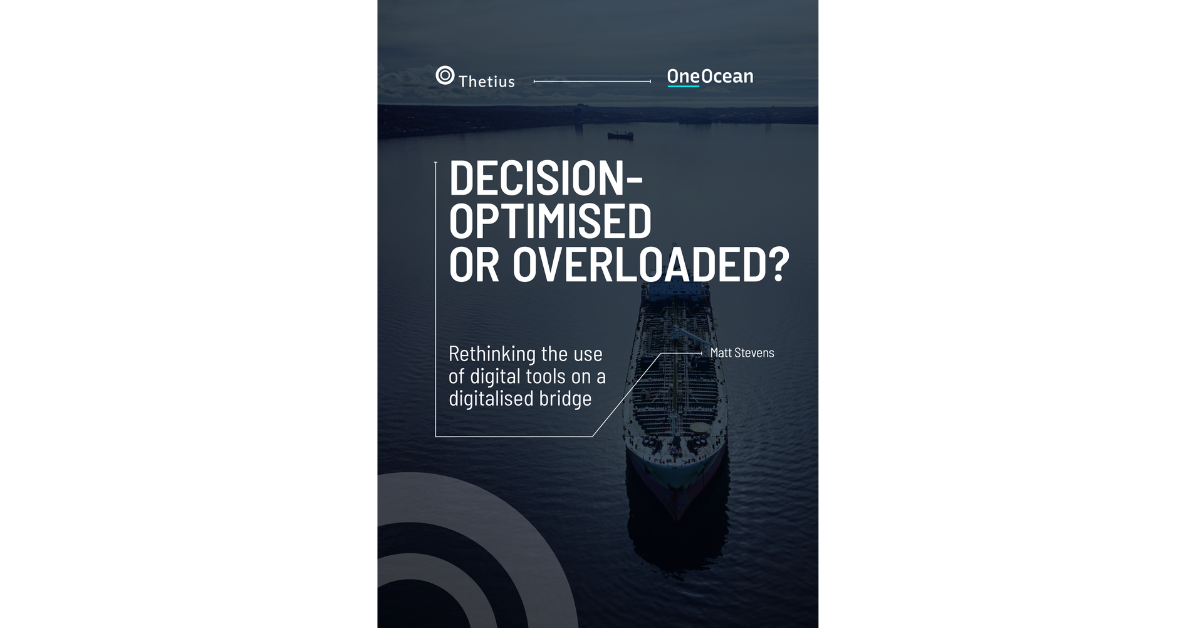
Decision-optimised or overloaded? Rethinking the use of digital tools on a digitalised bridge
The bridge has never been more capable. It has also never been more complex.
75% of mariners report moderate to significant workload increases from GNSS disruption alone. The challenge is not a lack of information. It is whether that information is presented in a way that supports safe and effective decision-making.
The bridge is now part of a broader digital operating environment connecting navigation, compliance, performance management, emissions reporting, and shoreside oversight. The issue is that technology has often been added in layers, creating more systems, more alerts, more data, and more interactions for crews to manage.
When tools do not communicate effectively, crews become the link between them, interpreting conflicting information, moving between interfaces, validating system outputs. Operational resilience becomes dependent on individual experience rather than good system design.
Decision-optimised or Overloaded?, commissioned by OneOcean, explores why growing bridge complexity is creating new operational risks, and what decision-ready systems need to look like in practice.
What you’ll discover in this report
Growing bridge complexity:Â how the nature of bridge work has fundamentally changed
Alert fatigue and information overload:Â why poorly configured systems create genuine operational risk
When the crew become system integrators:Â the hidden cost of fragmented tools
What decision-ready systems look like:Â understanding cognitive load and designing around it
From fragmented tools to integrated workflows:Â a practical path forward
Four recommendations for shipowners, technology providers, and regulators
Watch The Recorded Live Webinar
Discover More Thought Leadership Reports...

Before the fire: Dangerous goods safety and the visibility gap
In 2024 alone, there were 250 fire incidents at sea, a 20% increase year on year and the highest number ...

Competent or compliant? Seafarer readiness in modern maritime operations
Competent or compliant? Seafarer readiness in modern maritime operationsCrews have never been more qualified. The job has never been more ...

Decision-optimised or Overloaded? Rethinking the use of digital tools on a digitalised bridge
Decision-optimised or overloaded? Rethinking the use of digital tools on a digitalised bridgeThe bridge has never been more capable. It ...

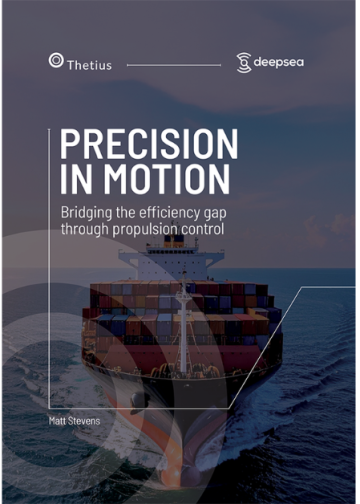
Precision in Motion: Bridging the efficiency gap through propulsion control automation
This Thetius thought leadership report, commissioned by DeepSea Technologies, explores the nature of the execution gap, the shortcomings of current ...

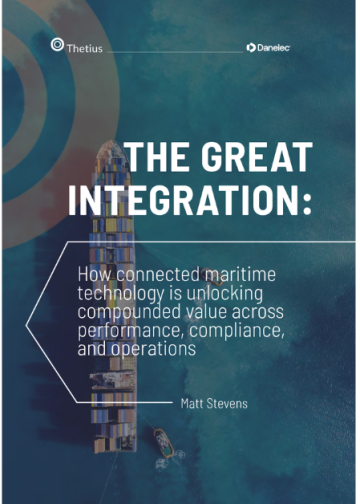
The Great Integration: How connected maritime technology is unlocking compounded value across performance, compliance, and operations
Our latest thought leadership report 'The Great Integration', commissioned by Danelec, explores why decision-making hasn’t improved at the same pace ...

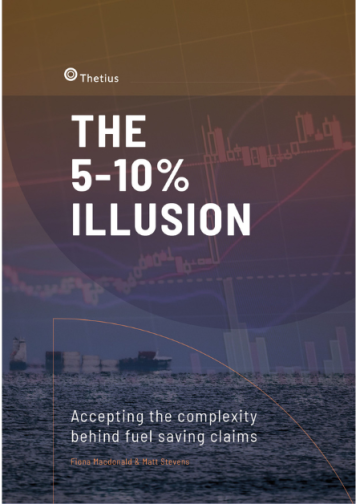
The 5-10% Illusion: Accepting the Complexity Behind Fuel Saving Claims
The 5-10% Illusion: Accepting the Complexity Behind Fuel Saving ClaimsA new report by Thetius, explores why the maritime industry’s reliance ...

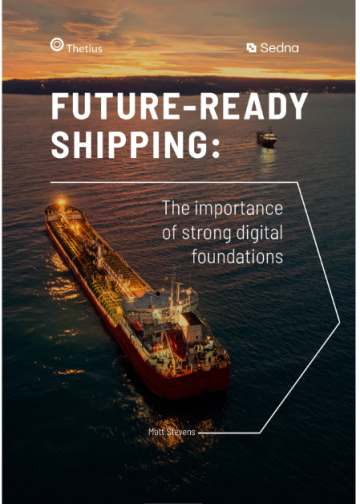
Future-ready shipping: The importance of strong digital foundations Â
Future-Ready Shipping: The Importance of Strong Digital FoundationsA new report by Thetius and Sedna exploring how shipping companies can move ...

Rethinking Cargo Data Exchange: Modernising Communication Between Terminals, Carriers, and Vessels
Rethinking Cargo Data Exchange: Modernising Communication Between Terminals, Carriers, and Vessels Despite high levels of investment in terminal operating systems, vessel ...

Co-Pilots of The Sea: Exploring The Human Intelligence Behind Maritime AI
Co-Pilots of the Sea: Exploring the Human Intelligence Behind Maritime AI Artificial intelligence is rapidly reshaping voyage planning and optimisation, ...

Unlocking safety and operational insights through wireless intelligence
Unlocking Safety and Operational Insights Through Wireless IntelligenceAs the maritime industry moves towards automation, digitalisation, and reduced crew numbers, safety ...