
• My Account
    • Log In
    • This content is only available to Thetius subscribers 🔒
  • Contact Us
Thetius
  • Free Content
    • Free Newsletter
    • Free Reports
    • Free Webinars
  • Markets
    • By Industry
      • Ship Operations and Management
        • Maritime Autonomous Surface Ships (MASS)
        • Environmental Management (Vessels)
        • Technical Fleet Management
        • Vessel Performance Optimisation
        • Decarbonisation (Vessels)
      • Chartering and Voyage Management
        • Chartering and Commercial Operations
        • Voyage Management
        • Market Intelligence
        • Risk Management and Marine Insurance
        • Trade Facilitation
        • Emissions Monitoring and Reporting
      • Port and Terminal Management
        • Terminal Operating Systems
        • Environmental Management (Ports)
        • Port Cargo Handling
        • Environmental Management (Ports)
        • Asset Management (Ports)
        • Port Call Management
        • Decarbonisation (Ports)
    • By Technology
      • Artificial Intelligence
      • Satellite Communications
      • Digital Platforms
      • Alternative Power Sources
      • Data and Analytics
      • Internet of Things
      • Carbon Capture and Storage Systems
      • Electronic Documentation
      • Robotics
      • Digital Twin
      • Cyber Security
      • Blockchain
      • Process Automation
      • Simulation
  • Research Services
    • IT Cost, Innovation, and Performance Benchmarking Club
    • Thought Leadership
    • Market Assessment
    • Customer Feedback
    • Competitor Analysis
    • Technology Strategy Workshops
    • Subscription Research
  • Upcoming Events
  • About us
    • About us
    • Careers
  • Get In Touch
  • Free Content
    • Free Newsletter
    • Free Reports
    • Free Webinars
  • Markets
    • By Industry
      • Ship Operations and Management
        • Maritime Autonomous Surface Ships (MASS)
        • Environmental Management (Vessels)
        • Technical Fleet Management
        • Vessel Performance Optimisation
        • Decarbonisation (Vessels)
      • Chartering and Voyage Management
        • Chartering and Commercial Operations
        • Voyage Management
        • Market Intelligence
        • Risk Management and Marine Insurance
        • Trade Facilitation
        • Emissions Monitoring and Reporting
      • Port and Terminal Management
        • Terminal Operating Systems
        • Environmental Management (Ports)
        • Port Cargo Handling
        • Environmental Management (Ports)
        • Asset Management (Ports)
        • Port Call Management
        • Decarbonisation (Ports)
    • By Technology
      • Artificial Intelligence
      • Satellite Communications
      • Digital Platforms
      • Alternative Power Sources
      • Data and Analytics
      • Internet of Things
      • Carbon Capture and Storage Systems
      • Electronic Documentation
      • Robotics
      • Digital Twin
      • Cyber Security
      • Blockchain
      • Process Automation
      • Simulation
  • Research Services
    • IT Cost, Innovation, and Performance Benchmarking Club
    • Thought Leadership
    • Market Assessment
    • Customer Feedback
    • Competitor Analysis
    • Technology Strategy Workshops
    • Subscription Research
  • Upcoming Events
  • About us
    • About us
    • Careers
  • Get In Touch
Thetius
Thetius
No Result
View All Result

How Selective Reporting Inflates Fuel Savings Claims in Shipping

Matt Stevens by Matt Stevens
April 15, 2026
in Free Content
0
How Selective Reporting Inflates Fuel Savings Claims in Shipping

Fuel-efficiency figures in shipping are often presented as simple percentages, but the numbers behind those claims can depend heavily on how performance is measured and reported. Small changes in methodology, baseline assumptions, or the scope of what is measured can significantly alter the savings a technology appears to deliver. This insight examines how selective reporting and inconsistent baselines can shape, and sometimes inflate, fuel-saving claims in the maritime sector.

According to Volker Bertram, HullPIC Conferences Founder, vendors often report savings based only on propulsive energy. This is the power used to move the ship, which typically accounts for only 60-90% of total fuel consumption, or around 20-30% for a cruise ship, according to Nicolas Degorce, Sustainability Project Lead at Bureau Veritas.

The rest, known as hotel load, includes cooling, pumps, lighting, and other onboard systems, and is usually excluded. This selective accounting inflates the reported savings.

For example, a vendor claiming 6% savings may apply that only to the propulsion share of fuel use, making the result appear larger than it truly is when compared to the vessel’s total energy consumption.

Andrea Farkas, Data Scientist at Hempel explained that when a premium hull coating is benchmarked against an old ‘market average’ speed-loss value of 5.9% from the Second IMO GHG Study, the result can be a claimed 21% fuel saving.

If the same product is compared against a more realistic modern baseline of 3.5–4% speed loss, the saving drops to around 10–11%. The underlying physics hasn’t changed, only the baseline has.

A common theme emerged throughout the interviews: inflated fuel-saving claims arise because performance data is seldom shared openly, and even then, it’s selectively reported.

Vendors attempt to gain control over the pilot data and results, which dents trust and allows optimistic or unverified fuel efficiency claims to go unchecked.

Meanwhile, many operators remain cautious about increased scrutiny. When performance comparisons reveal differences between peers, some may feel pressure to present their data in the best possible light. This hesitation towards full transparency or allow independent checks can mean that reported fuel savings sound more like marketing claims than proven results.

As David Levy, Chief Marketing Officer of OrbitMI explained during an interview, skepticism toward vendor performance claims is often well-earned.

“This industry has been on the receiving end of a lot of presentations and optimistic projections that didn’t hold up in operation. When buyers treat the next efficiency claim as something to interrogate rather than embrace, they’re responding rationally to what they’ve experienced.”

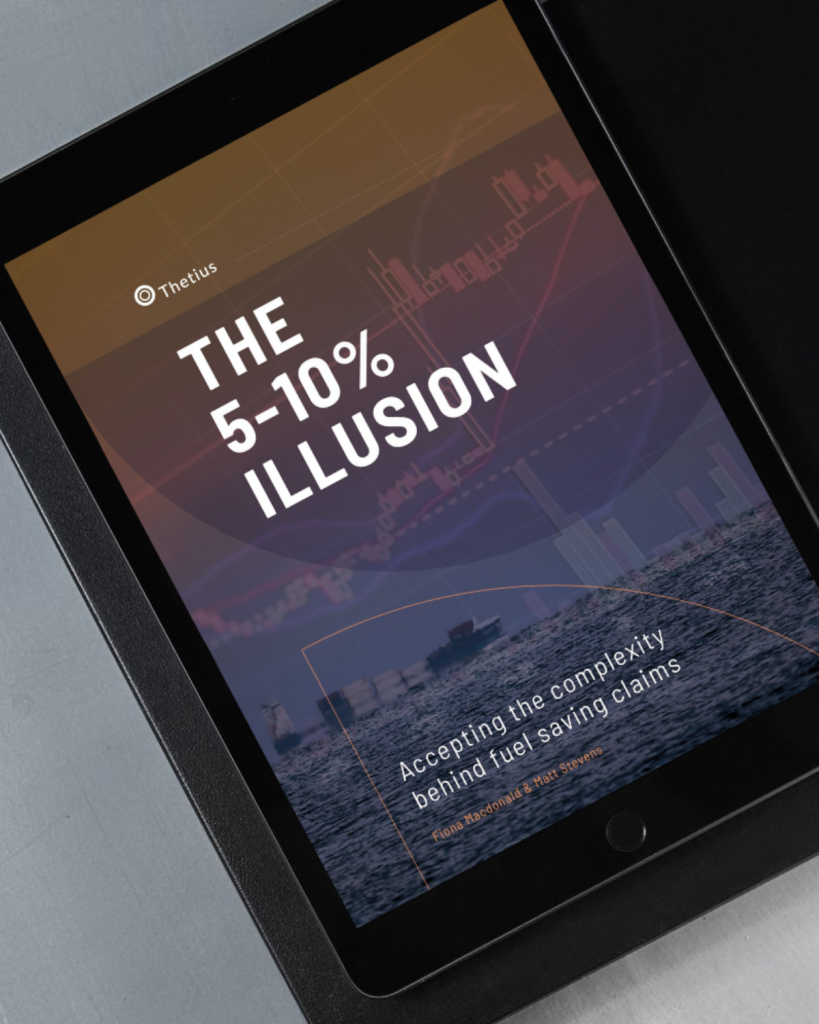
Download ‘The 5-10% Illusion’  and explore why the maritime industry’s reliance on unverified efficiency claims is eroding trust, and discover a framework to restore measurement discipline.
Tags: 5-10% Illusion
Previous Post

Defining ‘Good’ Data Quality, Ownership, and Compliance Pressure

Next Post

Why Fragmented Systems Are Limiting Maritime Decision-Making

Next Post
Why Fragmented Systems Are Limiting Maritime Decision-Making

Why Fragmented Systems Are Limiting Maritime Decision-Making

  • Client Login
  • Terms of Use
  • Privacy Policy

© 2026 Thetius is an Antares Digital Group Company

No Result
View All Result
  • Free Content
    • Free Newsletter
    • Free Reports
    • Free Webinars
  • Markets
    • By Industry
      • Ship Operations and Management
      • Chartering and Voyage Management
      • Port and Terminal Management
    • By Technology
      • Artificial Intelligence
      • Satellite Communications
      • Digital Platforms
      • Alternative Power Sources
      • Data and Analytics
      • Internet of Things
      • Carbon Capture and Storage Systems
      • Electronic Documentation
      • Robotics
      • Digital Twin
      • Cyber Security
      • Blockchain
      • Process Automation
      • Simulation
  • Research Services
    • IT Cost, Innovation, and Performance Benchmarking Club
    • Thought Leadership
    • Market Assessment
    • Customer Feedback
    • Competitor Analysis
    • Technology Strategy Workshops
    • Subscription Research
  • Upcoming Events
  • About us
    • About us
    • Careers
  • Get In Touch

© 2026 Thetius is an Antares Digital Group Company

We use cookies to ensure that we give you the best experience on our website. If you continue to use this site we will assume that you are happy with it.