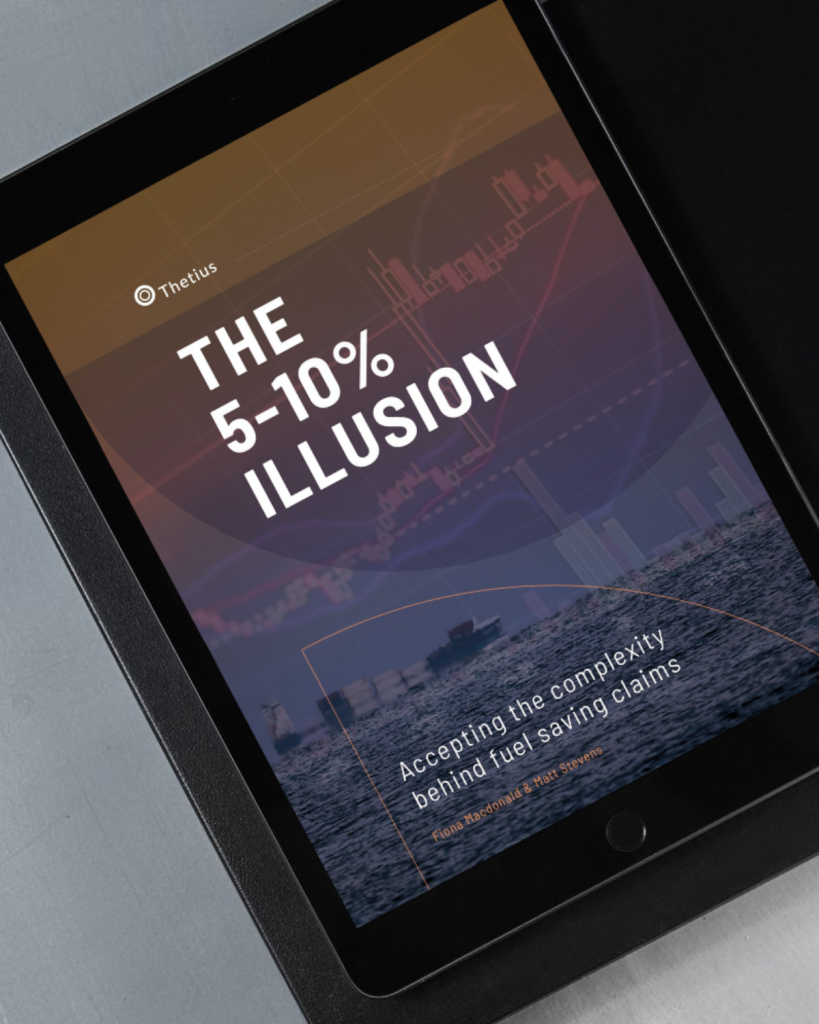


As the shipping industry works to reduce emissions and improve operational efficiency, technology providers are under increasing pressure to demonstrate measurable results. In a competitive market, headline fuel-saving figures can quickly become powerful marketing tools. This insight explores how commercial pressure and market competition shape the way efficiency claims are presented across the maritime sector.
Several major factors drive the 5-10% problem. These include commercial and market incentives, behavioural and cultural factors, complex systems that make verifying savings difficult, and weak and inconsistently applied standards.
Vendor marketing pressure is one of the most important drivers. “Some actors push extremely hard on the marketing because the return on investment makes a clear case for the sale.” This was a thought voiced by Jean Cristofari, CEO and Co-Founder of Spinergie but echoed by many throughout the research process.
Vendors face growing pressure to claim higher fuel savings as both market competition and regulatory scrutiny intensify. This scrutiny is driven in part by the increasing weight of international and regional GHG regulations, which collectively outline a roadmap of design, operational and market-based measures aimed at reducing emissions.
The IMO’s regulatory package, including the Energy Efficiency Design Index (EEDI), the Energy Efficiency Existing Ship Index (EEXI) for design and efficiency standards, and the Data Collection System (DCS) for fuel and emissions reporting, and Carbon Intensity Indicator (CII) for operational carbon intensity ratings, requires consistent, auditable performance data. In parallel, the EU Fit for 55 agenda, including the EU’s Monitoring Reporting and Verification (MRV) requirement and the Emissions Trading System (ETS) in addition to the FuelEU Maritime, reinforces these expectations with its own monitoring, reporting, and compliance mechanisms.
Together, these frameworks make accurate, verifiable fuel-saving claims more consequential than ever, elevating the importance of transparency and data quality.
According to Peter Mantel, Chief Commercial Officer at Theyr, bold figures like 5% or 10% still dominate the market because they attract attention. Yet these numbers often become perceived promises, despite disclaimers that results may vary. When real savings reach only 3%, customers see a shortfall instead of success, even if the gains are financially substantial.
The result is a cycle where vendors feel compelled to defend or exaggerate claims to remain competitive.
Customers fixate on the percentage. That pushes vendors to market impressive claims, even though real-world results vary depending on factors such as data quality, vessel condition, crew use, weather, and more.
Download ‘The 5-10% Illusion’ and explore why the maritime industry’s reliance on unverified efficiency claims is eroding trust, and discover a framework to restore measurement discipline.