

The global shipping industry is highly diverse, encompassing different vessel types, trading patterns and operational constraints. As a result, measuring and comparing vessel performance consistently across fleets and technologies is extremely challenging. This insight explains how fragmented operations, data systems and performance standards make reliable comparisons difficult across the maritime sector. Without alignment on how efficiency is measured, even genuine improvements can be difficult to prove.
With verification so difficult, companies begin developing their own methods for calculating savings.
Instead of moving toward harmonised performance frameworks, the industry fragments into incompatible measurement systems. Vendors use different baselines to present bigger results, owners adopt their own performance KPIs, and charterers want separate reporting.
There is a lack of alignment on what a “5% fuel saving” actually means.
In addition, fragmentation hits technology integration efforts. Exaggerated claims often come from proprietary, closed systems, causing buyers to end up locked into vendor ecosystems.
Open standards aren’t prioritised, performance data stays trapped inside vendor platforms, and integration between weather routing, vessel performance, and fleet platforms becomes harder.
Overclaiming indirectly rewards closed systems and discourages interoperability, increasing fragmentation.
However, data, models, weather inputs, standards, and even user behaviour are often inconsistent and disconnected, making it difficult to prove results and build trust.
This fragmentation is not limited to technology platforms. It also affects how performance data is interpreted across the industry.
Vendors may apply their own definitions of efficiency gains, while operators use internal benchmarks and charterers rely on contractual metrics that may not reflect operational reality.
As a result, the same dataset can be interpreted in multiple ways depending on the methodology used.
This lack of consistency undermines the credibility of performance claims and makes it difficult for shipowners to make informed decisions.
Without alignment on baselines, measurement methods, and reporting standards, even genuine efficiency improvements risk being lost in a landscape dominated by competing claims and incompatible data frameworks.
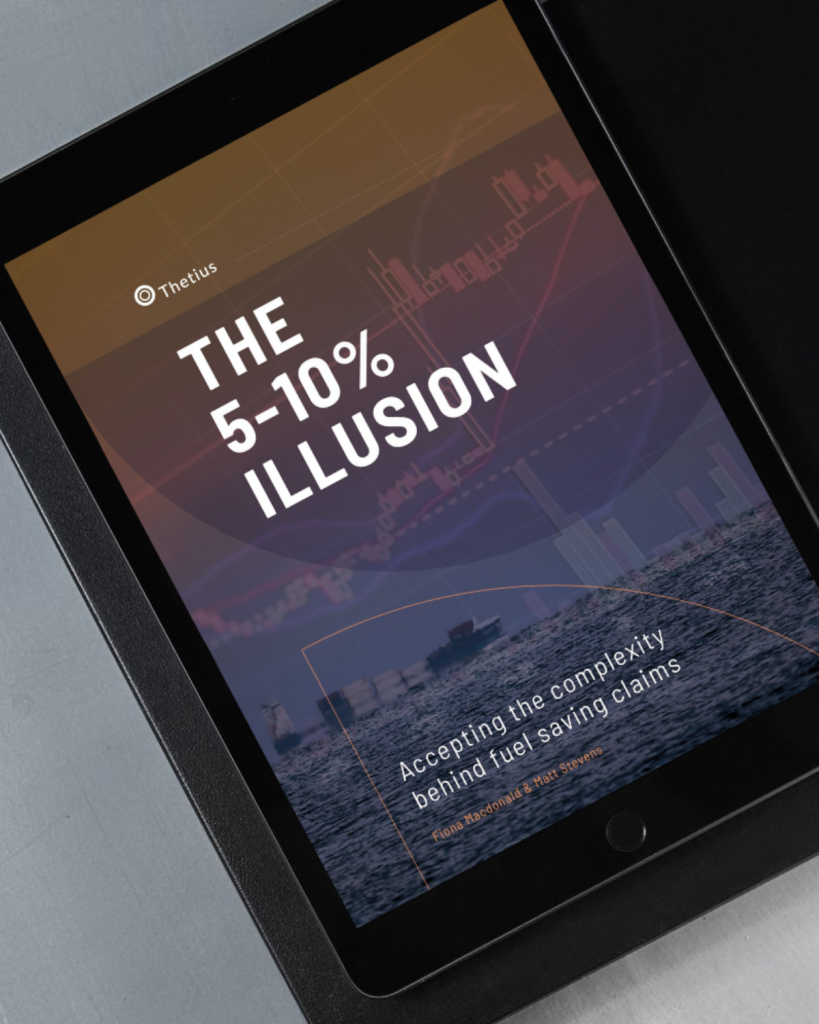
Download ‘The 5-10% Illusion’ and explore why the maritime industry’s reliance on unverified efficiency claims is eroding trust, and discover a framework to restore measurement discipline.